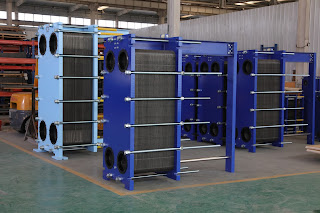
Electrochemical Antiseptic Maintenance of Plate Heat Exchanger

Hofmann Plate Heat Exchanger How does plate heat exchanger in the application maintain anti-corrosion? After knowing the reasons for a variety of corrosion of the heat exchanger, it is necessary to choose reasonable anti-corrosion measures in order to achieve the purpose of efficient use of equipment. To the corrosion of the situation, there is an anti-corrosion method. Here mainly introduced corrosion inhibitor, electrochemical protection. 1. Corrosion inhibitor Corrosion inhibitors with chromate as the main ingredient are commonly used in cooling systems. Chromic acid is an anodic (process) inhibitor, which, when combined with a suitable cathodic inhibitor, has satisfactory and economical anti-corrosion effect. Chromate – Zinc - Polyphosphate: Polyphosphates is used because it has the effect of cleaning metal, has the ability to inhibit corrosion. They can be partially converted to orthophosphate; can also produce large colloidal cations with calcium to inhibit ...